
Quick Rundown
What Is a Soft Hand in Blackjack?
A soft hand in blackjack is any hand that contains an Ace counted as 11. The name “soft” comes from the fact that the hand’s value is flexible. If you draw a card that would push you past 21, the Ace automatically drops from 11 to 1, saving you from busting.
For example, if you’re dealt an Ace and a 5, you have a soft 16. You can hit without fear because even pulling a 10 only brings your total to 16 (Ace switches to 1, plus 5, plus 10). That built-in safety net is exactly what makes soft hands so valuable at the blackjack tables offered by top sweepstakes casinos.
Compare that to a hard hand, which either has no Ace at all or has an Ace that must count as 1 to avoid going over 21. A hand of 10-7 is a hard 17. So is Ace-6-10, because the Ace has already been forced down to 1. Hard hands carry real bust risk when you hit, which is why the strategy for each type looks completely different.
Soft Hand vs. Hard Hand: The Key Differences
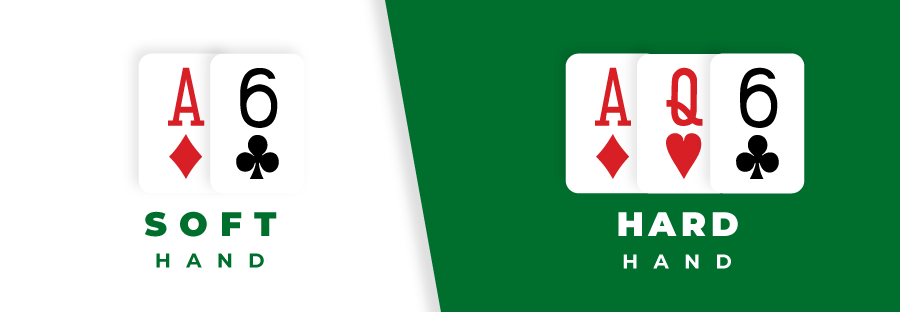
Understanding the difference between soft and hard hands is one of the first things any blackjack player should lock in. Here’s how they stack up:
Flexibility. A soft hand gives you room to take risks. You can hit on a soft 17 knowing you won’t bust. A hard 17? You’re stuck. One extra card could end your round.
Bust risk. Soft hands carry zero bust risk on the next card. If you hold a soft 13 (Ace + 2) and draw a 10, your Ace shifts to 1, giving you a hard 13. Not great, but you’re still alive. With a hard 13, drawing anything above an 8 busts you immediately.
Strategy adjustments. Basic strategy charts treat soft and hard hands as entirely separate categories. Plays that would be foolish with a hard total, like hitting on 17, become correct with a soft total. Players who don’t make this distinction leave money on the table. If you’re brushing up on casino game strategies at StakesCheck, understanding this split is fundamental.
How to Play Soft Hands: Basic Strategy Breakdown
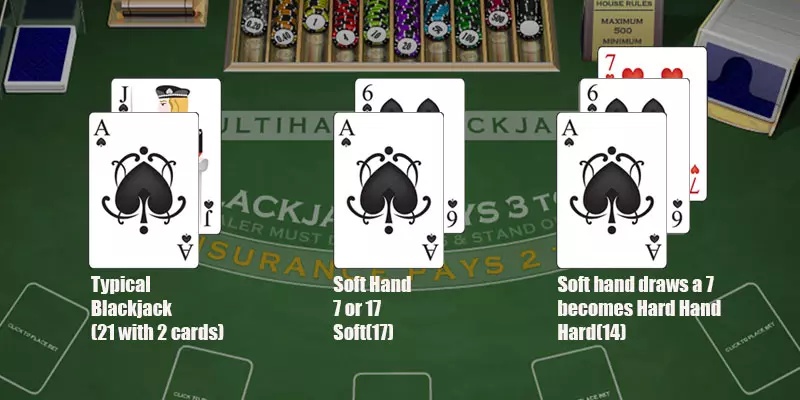
The whole point of recognizing a soft hand is knowing you can play more aggressively. Here’s how basic strategy handles the most common soft totals:
Soft 13 and Soft 14 (Ace + 2 or Ace + 3). Double down when the dealer shows 5 or 6. Otherwise, hit. These hands are too low to stand on, but doubling against a weak dealer card squeezes out extra value.
Soft 15 and Soft 16 (Ace + 4 or Ace + 5). Double down when the dealer shows 4, 5, or 6. Hit against everything else. The dealer’s weak upcard gives you an edge worth pressing.
Soft 17 (Ace + 6). This trips up a lot of players. Standing on 17 feels safe, but soft 17 is actually a weak hand. Double down against dealer 3 through 6. Hit against everything else. You have nothing to lose by trying to improve, since the Ace protects you.
Soft 18 (Ace + 7). The trickiest spot. Stand against dealer 2, 7, or 8. Double down against dealer 3 through 6. Hit against dealer 9, 10, or Ace. An 18 is decent, but against a strong dealer upcard, you need to try for better.
Soft 19 and Soft 20 (Ace + 8 or Ace + 9). Stand. Always. These are strong hands, and chasing a marginal improvement isn’t worth the risk.
Players who enjoy blackjack at sweepstakes casino platforms can practice these moves in free-play mode before putting Sweeps Coins on the line.
Why Soft 17 Fools So Many Players
Soft 17 deserves its own spotlight because it’s the most commonly misplayed hand in blackjack.
Most beginners see “17” and immediately stand. It sounds reasonable since 17 is only four points from 21. But here’s the thing: a 17 only beats dealer totals of 16 or less. The dealer will end up with 17 or higher roughly 60% of the time, meaning your soft 17 will lose or push more often than it wins.
Because the Ace gives you a free shot at improving, hitting or doubling on soft 17 is almost always the better play. You might draw a 2, 3, or 4 and land on 19, 20, or 21. You might draw a face card and end up with a hard 17, which is exactly where you’d be if you stood. There’s no downside.
Casino rules matter here too. Many casinos require the dealer to hit on soft 17 (often noted on the table felt as “Dealer Hits Soft 17” or “H17”). This rule actually increases the house edge slightly, which tells you something: the casino knows hitting soft 17 leads to better outcomes, and they apply that same logic to the dealer’s play.
Common Soft Hand Mistakes to Avoid
Even experienced players slip up with soft hands. These are the mistakes that cost the most over time:
Standing on soft 17. As covered above, this is the single biggest soft hand error. Always look to improve a soft 17.
Treating soft 18 as untouchable. An 18 feels strong, and it often is. But against a dealer showing 9, 10, or Ace, standing on soft 18 is a losing play in the long run. Hitting gives you a chance to reach 19, 20, or 21.
Forgetting to double down. Doubling on soft hands against weak dealer upcards is where a lot of your edge comes from. Skipping these opportunities because “I already have a decent hand” is leaving value on the felt.
Not adjusting for table rules. Some tables restrict doubling on soft hands or limit it to certain totals. Always check the rules before sitting down. If doubling isn’t allowed, hit instead, but know that the house edge goes up slightly.
If you want to sharpen your overall casino approach, the roulette strategy guide on StakesCheck breaks down another popular table game in the same practical style.
Quick Reference: Soft Hand Strategy Chart
Here’s a simplified version of basic strategy for soft hands. “D” means double down (hit if doubling isn’t allowed), “H” means hit, and “S” means stand.
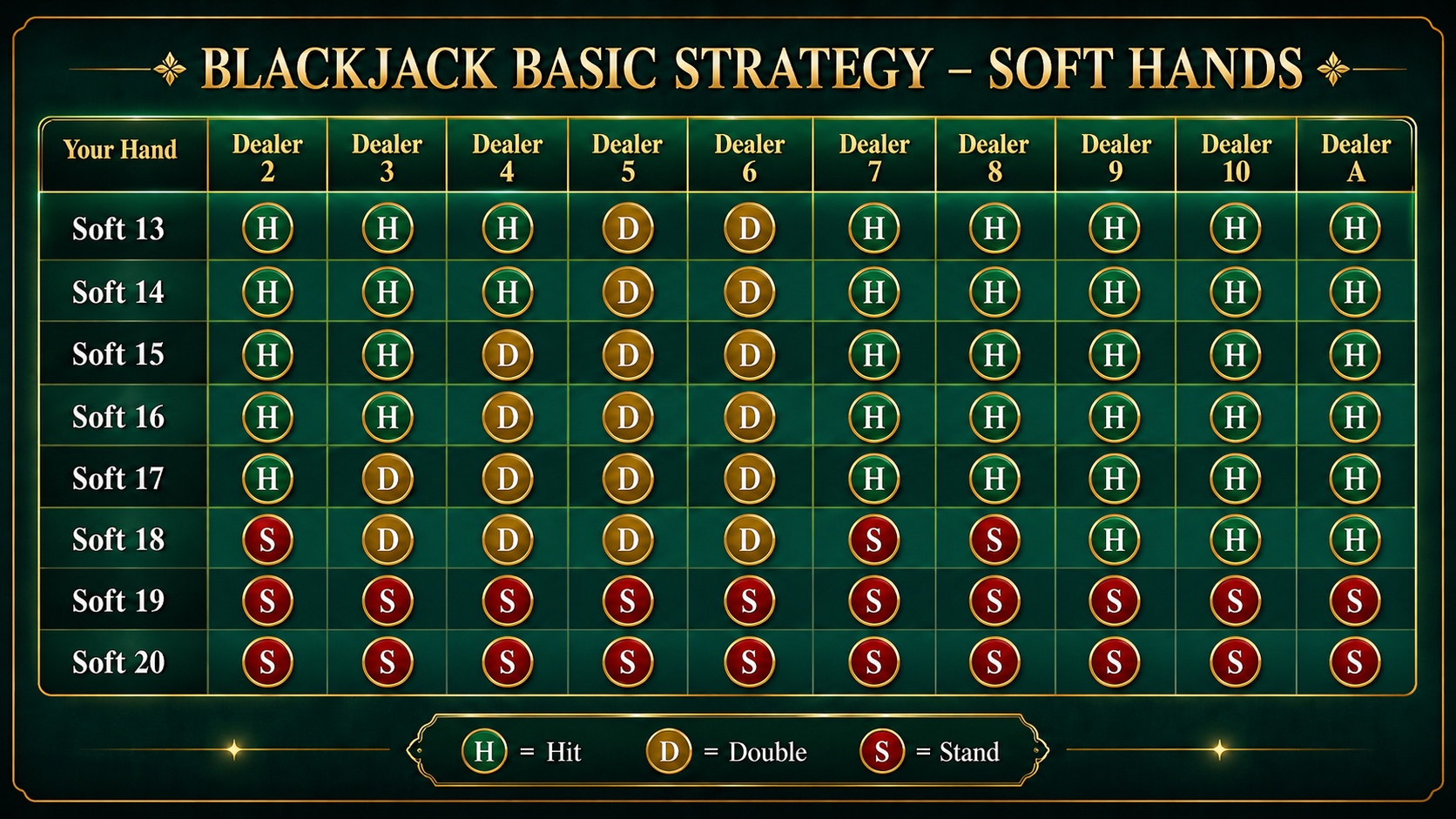
Save this chart or keep it open while you play. Over time, these moves will become second nature.
Practice Soft Hands Before Playing for Real
One of the best ways to get comfortable with soft hand strategy is through practice. Sweepstakes casinos offer a low-pressure way to play blackjack using Gold Coins, which carry no real monetary risk. You can test your soft hand decisions over dozens of rounds without worrying about your bankroll.
Once the strategy clicks, you can switch to Sweeps Coins for a shot at real prizes. Just remember that blackjack, like every casino game, carries a house edge. No strategy eliminates that entirely. Basic strategy minimizes it, but outcomes still depend on the cards.
Play responsibly, set limits before you start, and never chase losses. If gambling stops being fun, resources like BeGambleAware.org and the National Council on Problem Gambling (1-800-GAMBLER) are available 24/7. You must be 18+ (21+ in some states) to play at sweepstakes casinos.