Texas does not license a real-money online casino for people playing in Texas. Texas Penal Code Chapter 47 has exceptions for specific activities. A state lottery ticket, a bingo game on tribal land and a free promotional drawing each have a different legal basis. None gives an app permission to take Texas bets on blackjack, roulette or slots. Status checked November 26, 2026.
If you're holding your phone in Texas, a deposit button is the wrong place to start. Look at what you would pay, what you could win and which authority, if any, licenses that particular activity where you are. The answer changes little when the same game is offered in a browser instead of an app.
Can a real-money online casino operate with a Texas license?
No state licensing system authorizes online casino operators to take real-money casino bets from the general public in Texas. An out-of-state address on a company's website identifies the company. A list of payment options describes how it moves money. Neither explains which Texas law permits it to offer the game. The Texas State Law Library's gambling guide connects the general prohibition to the specific exceptions.
What you're looking at | What it means in Texas |
|---|---|
Online slots requiring a cash stake for a cash prize | No Texas licensing system for this activity. |
Entertainment app with no redeemable prizes | Check the rules for purchases, transfers and prizes before assuming how it works. |
Offshore casino | An overseas license does not authorize a Texas online casino. |
Sportsbook app | Texas has not authorized a statewide mobile sports-betting market. |
Promotional prize drawing | The entry method, rules and sponsor matter. A promotion has no blanket casino authorization. |
State lottery or licensed charitable bingo | Specific laws govern the approved product and channel. |
Gaming on tribal land | Federal law and the specific tribe, location and game matter. |
Think about two screens that each show three reels and a balance. On one screen, a player can spend a virtual token, but neither that token nor a win can be exchanged for anything of value. On the other, a payment buys play and the resulting balance can be paid into a bank account. Much of the artwork could be identical. The two offers make different promises about what passes between the player and the company. The terms that describe those transactions tell you more than the picture of the reels.
What the Texas Penal Code actually says
Section 47.01 of the Texas Penal Code defines a bet around an agreement to win or lose something of value, wholly or partly by chance, and then lists exclusions. Section 47.02 covers several kinds of gambling. Among them is playing and betting for money or another thing of value at a game using cards, dice, balls or a gambling device. A game can involve decisions and still involve chance under that wording.
One recurring claim concerns private gambling. Section 47.02(b) sets out a defense to prosecution with three conditions. The gambling must take place in a private place. Nobody can receive an economic benefit beyond personal winnings. Except for skill or luck, everyone must face the same risks of losing and chances of winning. Being alone on your own couch addresses none of the questions about the business on the other end of the connection. A fee collected by a host and a game banked by a commercial house each raise questions the slogan "play in private" leaves unanswered.
Consider a poker game among friends. The state asks about where it takes place, who benefits, and how the game operates. A commercial website that takes a cut cannot borrow the legal position of a private gathering simply by describing its lobby as a members' club. The statutory language also matters more than the size of the stake. A small buy-in can still involve something of value. A site that limits participation to adults age 21 or older can impose that restriction on customers, but the age language does not supply a license to offer the underlying game.
Which activities have their own rules?
The state lottery is one example of a narrow exception. Another is charitable bingo operated under the applicable rules. Texas transferred administration of the lottery and licensing and regulation of charitable bingo to its licensing authorities on September 1, 2025. The legislature's summary of SB 3070 sets out the transfer. It did not create a general online casino regulator. Seeing the name of a real Texas agency on an unrelated offer should prompt a check of what that office actually regulates.
Tribal gaming is a second source of confusion. In June 2022 the U.S. Supreme Court decided a dispute about the Ysleta del Sur Pueblo, bingo and the federal Restoration Act. The Court distinguished activities Texas prohibits from activities the state permits but regulates. Its decision on the Pueblo's gaming rights concerns gaming on tribal lands under the relevant federal law. The decision doesn't turn an app accessible throughout Texas into an authorized tribal casino.
A reference to the Pueblo or a photo of a tribal gaming facility on a website proves little by itself. Ask whether the named tribe operates that product and whether the rule being quoted covers the game, location and method involved. A visit to a venue and a bet placed from a mobile phone elsewhere in the state are separate factual situations. Even legitimate information about one doesn't answer a question about the other.
The same caution applies across state lines. A license issued by another U.S. state covers the operator and activities authorized in that market. Its logo cannot travel home with a visitor and authorize play in Texas. Our state gambling directory separates state-specific guides from national comparisons. The state law guides collect articles on related legal questions. Read our California casino guide if that's the location you're checking instead.
How to read a sweepstakes offer
Start with the sponsor's official promotion rules and the terms of the underlying game. Some sites describe an entertainment currency as Gold Coins and a separate promotional currency as Sweeps Coins. The entertainment coins generally have no cash prize value. Promotional entries may lead to prizes under the sponsor's conditions. A real-money casino takes a stake on a casino game. Those models need separate explanations, including where a product combines a coin purchase with promotional entries.
Look for the part that says how a person can enter without buying anything. Is there a description of the actual method, the sponsor and the period in which entries are accepted? Does the eligibility language mention a state, age or physical-presence condition? Are there different rules for redeeming a prize and for playing the entertainment game? A free-entry route can be relevant without settling every question about how a specific promotion operates. Our sweepstakes rules explainer defines the two balances and the redemption terminology.
Texas has separate laws for promotions. Business and Commerce Code Chapter 622 addresses certain sweepstakes and includes specific limits on when it applies. Section 622.051 limits the chapter to sweepstakes conducted through the mail and excludes a promotion when the only mailing is a consumer returning an entry form. Section 622.052 also excludes a sweepstakes whose most valuable prize is worth less than $50,000 from that chapter. That figure determines the scope of a particular chapter. A sponsor cannot use it as a universal safe harbor under all Texas law. The State Law Library's contest guide distinguishes prize promotions from raffles and points to the relevant laws.
If a screen says that a purchase is optional, read what happens if you decline it. A real free-entry process should have identifiable instructions. If the only thing you can find is a payment page, keep your money. Likewise, a sponsor's decision to include Texas in its list of eligible locations describes its own offer. A private list has no power to license a casino.
Why offshore casinos and no-deposit offers need a separate check
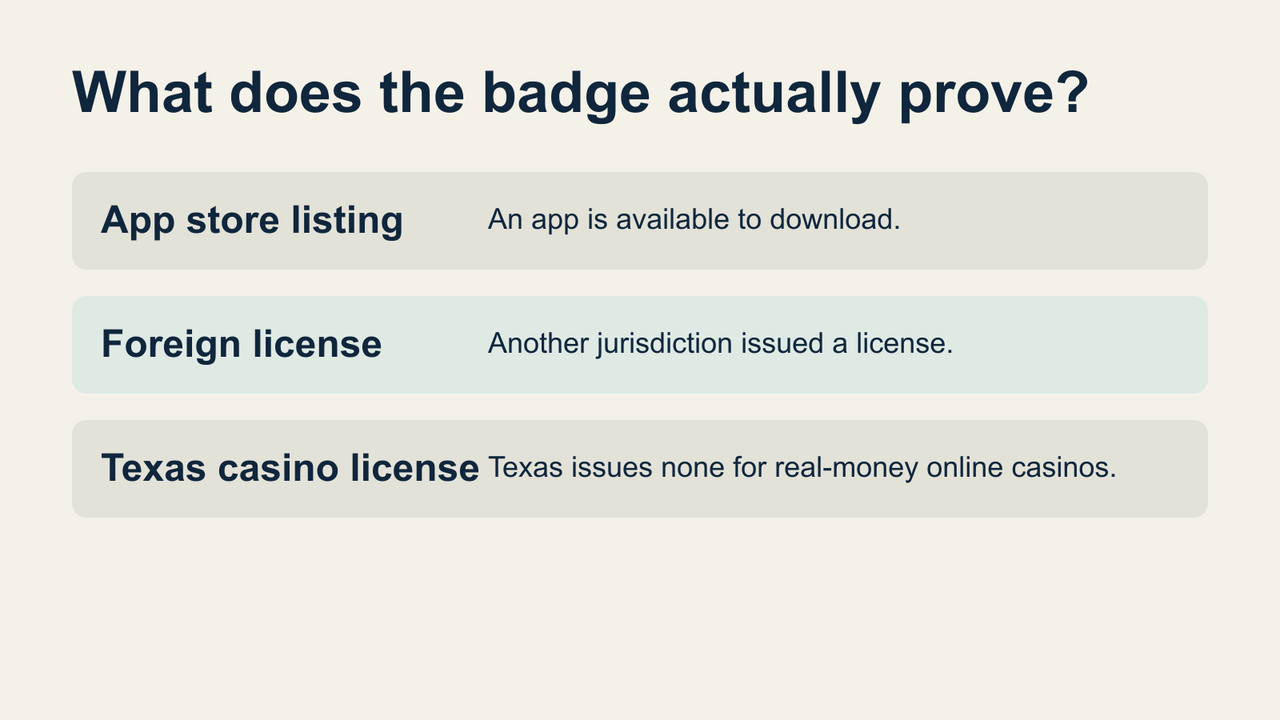
An offshore operator can accept a Texas address or show a Texas flag in its cashier. Neither action provides a Texas casino license. If you have a payout dispute, you won't have a Texas online casino regulator supervising that account. The business might identify a foreign regulator or another dispute process. Check the actual company name, the domain and whether the named authority covers the specific operator before giving a website personal information.
A no-deposit offer raises a second set of questions. Does the displayed amount represent a cash balance, an amusement credit or a chance to enter a promotion? What would you have to do before any amount could be redeemed? A banner that shows a dollar sign can hide that distinction until you open the terms. Read our no-deposit offer breakdown for examples of language to inspect. Availability in the United States somewhere is a different claim from availability while you're in Texas.
Payment technology also supplies no missing authority. Paying with a bank card, a digital wallet or cryptocurrency changes how a transfer travels. It doesn't change the game the money is buying. Once a transfer is complete, the recipient and the available dispute procedures can matter a great deal. The crypto safety guide covers transaction and account checks.
Suppose an ad promises a free balance and the sign-up form accepts a Texas ZIP code. Before sharing an ID, open the terms linked from the bottom of the page and locate the legal name of the business. Compare it with the sponsor in the promotion rules. Look for the section on excluded locations, the currency used for the advertised balance and the party responsible for resolving a complaint. If the documents describe different companies or contradict the ad about Texas, save both versions and leave the offer alone. The ability to create an account tells you very little about what will happen at redemption.
What a Texas casino bill would change
Read the bill history before treating a headline as news that casinos have opened. On November 9, 2026, Senate Joint Resolution 11 was filed for the 90th Legislature. The legislature's filed Senate measures describe a proposed constitutional amendment that would authorize the legislature to regulate and authorize casino gaming and sports wagering by law, subject to requirements. Filing the resolution did not approve its text, amend the constitution or issue an operator license.
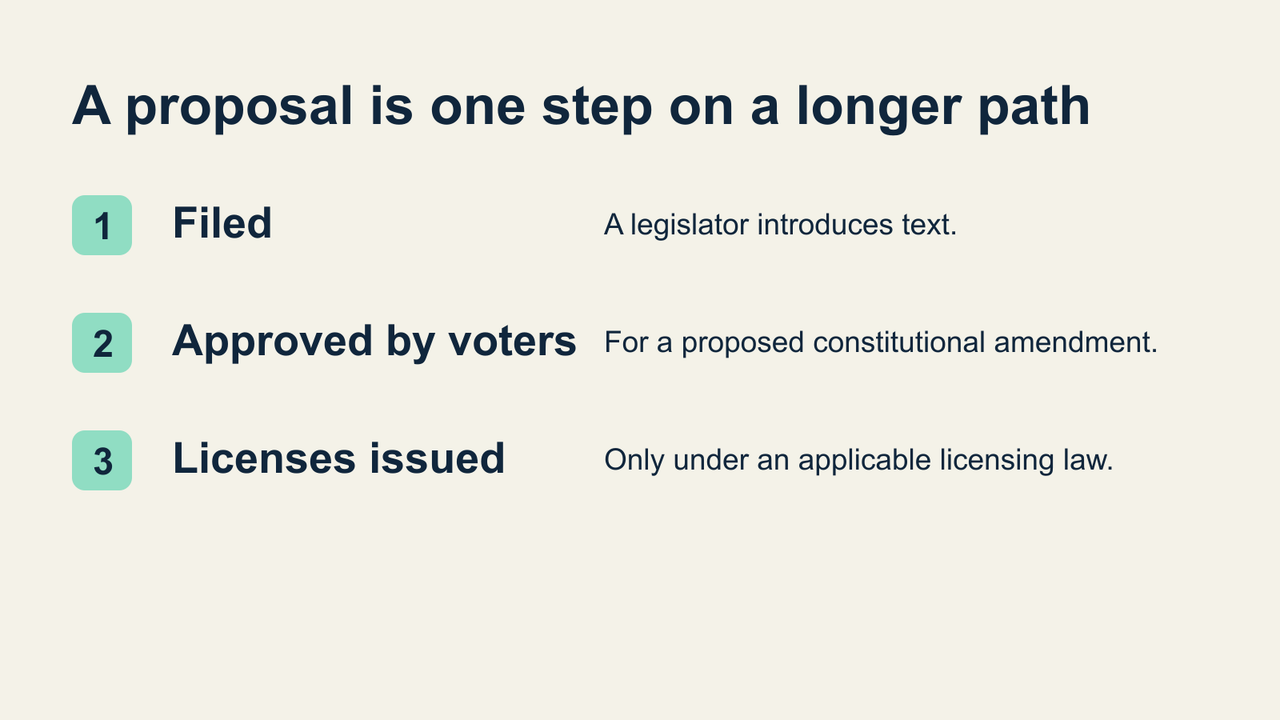
An ad may use the year a measure was filed as if it were an opening date. Ask for the legal instrument it relies on and read its current status. A document marked "introduced" or "filed" tells you what a sponsor is proposing. A vote to advance one version doesn't establish the final text. If a measure eventually takes effect, details such as which games it covers, who may conduct them and whether remote play is included still matter. A proposal about destination resorts in particular shouldn't be read as an approval for a statewide mobile casino.
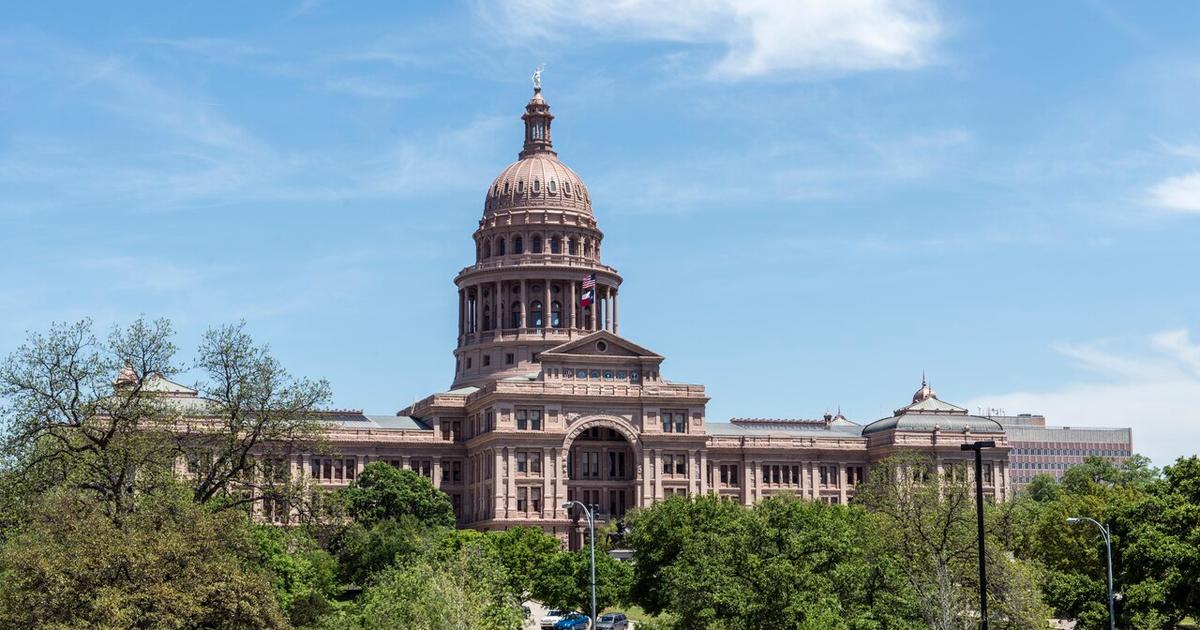
The Capitol pictured above is in Austin. The photograph is by Carol M. Highsmith, from the Library of Congress collection. A picture of the Capitol on an operator's site would establish no more about its license than that picture does here.
If a site claims you won money
Distinguish the ordinary act of reading rules from a demand for more money. If a caller, email or chat agent says you've won but must first send a tax, insurance charge or release fee, stop and save the message. The Texas attorney general's advance-fee guidance identifies paying money up front to obtain a supposed prize as a scam. Use the agency's contact information independently of the message.
Keep screenshots of the advertised offer, the name on the payment receipt, dates, terms and any conversation about the withdrawal. Contact your payment provider promptly through its own website or the phone number on your card if you think a transaction is fraudulent. An honest account of what happened helps the provider distinguish an unauthorized payment from one you approved after a misleading promise. A legitimate U.S. prize may have tax consequences. Our guide to prize taxes explains why a demand to send "tax" to release a win and your own tax reporting are separate matters.
How are gambling winnings taxed in Texas?
Texas has no individual state income tax. Article VIII of the Texas Constitution prohibits a tax on individual net income. Federal reporting is separate. For casual gamblers, IRS Topic 419 says gambling winnings are taxable, including the fair market value of noncash prizes, even if you receive no Form W-2G. Keep the date, amount and documents associated with a payout. If multiple states are involved, ask a tax professional how those facts affect your return.
Decide whether to spend anything
You can also decide that no amount of account research is worth putting money at stake. If spending on games has started to affect ordinary expenses, the gambling budget guide includes ways to set limits. Turn off promotional notifications, close the page, or choose an entertainment game that cannot redeem anything of value. If gambling is interfering with bills or relationships, the Texas Lottery's responsible gambling resources list confidential, 24-hour help at 1-800-MY-RESET (800-522-4700).
Frequently asked questions
Is online gambling legal in Texas if I use a licensed app from another state?
An operator's license from another state does not authorize real-money online casino play from Texas. Check the rules for the place where you're physically playing, the game and the operator. A license covering one particular market can't grant Texas authority.
Does Texas license any real-money online slots?
Texas has no statewide licensing system for real-money online casino slots as checked November 26, 2026. A machine at a tribal facility, a free simulation on a phone and an online slot with cash deposits involve different facts and different legal questions.
Is a sweepstakes casino the same as a Texas casino?
No. A prize promotion runs under its official rules and applicable law. The sponsor should identify where entries are allowed, the free method of entry, the prizes and the process for claiming them. A sponsor's own eligibility list is not a state-issued gaming license.
Can I legally play online just because I'm at home?
Playing in a private place is only one part of the private-gambling defense in Texas Penal Code section 47.02(b). The economic benefits and participants' chances of winning and risks of losing also matter. Sitting at home does not establish a defense for betting on a commercial casino site.
Has Texas approved the November 2026 casino proposal?
The November 9 filing of SJR 11 was a proposal for a constitutional amendment. Filing does not amend the constitution, enact a licensing statute or authorize a site to accept deposits. Look up the current official history if you're reading after November 2026.